
Family Card - Person Sheet
Family Card - Person Sheet
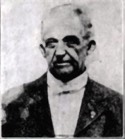

Notes for William Brown Foster
NO ROOM IN THE TENT FOR POLECATS
By W. B. Foster, San Antonio, Texas
I was born January 6, 1849, one mile from Foster
Cross Road, Sequado Valley, East Tennessee. I lost my
mother when I was seven years old. One year later my
father married Mrs. Julia Morris and moved to Hickory
Hill, Gallatin county, Illinois. I stayed there until I was
eighteen years old, then I went to East Tennessee, stay-
ing there three years and then drifted over to Trotters
Landing, Mississippi, and from there came to Texas. I
landed in San Antonio April 6, 1871. Killed my first
wolf on Dignowity Hill, now being in the city limits. I was
there only a short time until I hired to W. M. Todd to go
north with cattle. Wade Hampton of Seguin had
charge of the herd. Todd bought horses for himself.
Major George of Seguin and also hired men for Todd's
Monoy & Wilbert of Nevada three outfits. We camped for
several days under a big hackberry tree that now
stands on Roosevelt Avenue in San Antonio. From there
we went to Guadalupe River. Major George took one
outfit to Seguin. We camped in a little pasture belong-
ing to Mr. Braners just north of Youngford. While there
Col. Todd bought a fine pair of steers from Edwards &
Ervin. He wanted them broke to work so we drove them
out on the prairie, roped and tied them down, yoked them
and tied their tails together, tied the bed to the wagon,
put a rope around their horns, put a half hitch in their
mouths and then hitched them to the wagon. Al Meyers
and myself got into the wagon to drive, the boys untied
their legs and other men rode on each side to keep them
straight, and if you don't think we had a ride over those
hogwallows, you have another thought coming. We could
handle them when we went to receiving cattle.
We next moved to Cordova Pens, four and a half
miles northwest of Seguin, where we road-branded the
cattle TOD that we had received from J. Plumer at the
May pasture, two miles from the Sutherland Springs, the
ranch brand being AT. We received 1,300 head in four
herds. In coming from the May pasture to the branding
pens, we came by Sutherland Springs, crossed the Guada-
lupe River at Sheffield Ford below Seguin, and passed
north of Seguin.
Just as we started on the trail, W. M. Pusey came
from Denver, Colorado. Todd let him have Wade Hamp-
ton to help him gather a herd. Pusey was Todd's son-
in-law. Todd then hired Col. G. W. Nail of Hunter to
boss his herd. We crossed the San Geronimo Creek at the
Austin Crossing, the San Marcos at the McGee crossing
by the Manchaea Springs; here I witnessed the densest
fog I ever saw. We crossed the Colorado River west of
Austin, left Round Rock to the left, and crossed the
Gabriel River some distance east of town. Little River
was up, as it had been raining and everything crossed
but one steer. I roped him and got him in the water and
he swam across.
Todd had a very fine mare which he had bought from
Nick Crenshaw at Seguin. A man by the name of Thomp-
son, who was riding her, went around a bend of the river
here and we never heard or saw anything of him or the
mare after that.
We crossed just above the suspension bridge at Waco.
At Hillsboro the cattle stampeded around a school house.
The young lady teacher was quick to close the door, but
the kiddies were seared just the same. I rode a big horse
that I called "Jack Moore" and he was some horse. We
had just left Hillsboro, when the cattle spied a little girl
going to school with a red shawl on her head. Each
corner of the shawl was blown by the wind and this was
more than the cattle could stand. I was behind the herd
and saw what was exciting the cattle so I got all there
was in "Jack Moore" and picked her up just in time.
At Cleburne a bad man beat up Tony Wilder, a seven-
teen year-old boy that belonged to our outfit. Al Meyers
tried his hand on the bad man, using his quirt. Wilder
never carried arms of any kind; he was more like a girl
than a boy and everyone in the outfit loved him. He and
myself were the only ones out of an outfit of twenty-two
men that had not killed a man.
At Fort Worth the river was up. We went up about
ten miles west of town and cut brush to build a chute to
the river in order to force the cattle into the water, the
bank being about eight or ten feet higher than the water.
I always led the cattle across all streams and on this
occasion I went down that chute in front of a stampeded
herd. On the north bank my horse bogged, I jumped off
him and as I did so I discovered several Indians sitting
on a log nearby. I shouted back to the men on the other
side that there were Indians there. It was some time be-
fore the other men crossed on a ferry just below the
mouth of the Clear Fork of the Trinity River, and when
they got there the Indians were gone.
At the Trinity River we wound up a wild drive of 100
miles in four days with stock cattle. Col. Todd was
drinking all the time and was very disagreeable, which
caused Colonel Nail to leave us. Every one in the outfit
was sorry to see him leave as he was a fine man and one
of the best cowmen I ever saw.
As we neared the Red River Canon, we were strung
out on the trail, a small herd to our right tried to rush
to the mouth of the canyon. When they got close, and were
about to pass us Al Meyers commenced to shoot in front
of them. They had business the other way, and like they
were in a hurry to get there. Red River Canyon is about
twenty-five miles through and only one place where a
herd could be bedded. When we camped near the Red
River Station, I quit and went to town ahead of the herd.
The river was very high. People tried to get Todd to
wait until the water went down. None of the men would
lead the herd. The cattle got about the middle of the
stream and then went to swimming in a circle. Todd
began calling for me. He had long white hair and was
wild for short time. He turned to Al Meyers and said
''You know where my son Foster is? Tell him I will give
him anything in the world if he will save my cattle for
me. ' I stripped to my underclothes, mounted "Jack
Moore" and went to them. I got off the horse and right
on to the cattle. They were so jammed together that it
was like walking on a raft of logs. When I finally go
to the only real big steer in the bunch I mounted him
and he pulled for the other side. When he got near the
bank I drifted down the stream to the horse. It must
have been about 9 o'clock in the morning, on the 8th day of
June, 1871, so I kept the herd together all day until nearly
sundown; no hat, no saddle-just my underclothes.
At Monument Rock some of the boys put the Colonel's
tent over a bed of polecats and when he went to bed they
tied the front of the tent. In trying to get out a little
later the Colonel tore down the tent.
The next morning the Colonel sent me to Fort Sill
after the mail. It was thirty-five miles to Fort Sill and
the Indians were on the warpath, but I did not see any.
I caught the herd again at the old stage stand. I had a
letter for Al Meyers, and in thirty minutes he was on
his way to Philadelphia, Pa., to get married. Jimmie
Billings also got a letter telling him that he could return
to New York City, his old home. He had been a bounty
jumper during the war.
The next day Colonel Nelson and I were near the trail
when the stage came along. The driver told Nelson that
the officers had learned where be was and that they
would be after him soon; he then rode around the herd
and was gone. Nelson was the right-hand man to John
Morgan, the raider, during the war between the states
He bad been boot-legging in Indian Territory.
We crossed the Washita River where the McDonald
ranch is now and crossed the Canadian River at Billie
Williams' store. That night Colonel Todd and I fell out
and I quit. He talked a long time to me before I would
agree to stay with the outfit until he got out of the
Indian country.
The next morning when I went out to try to get a wild
turkey, I rode into a bunch of Indians. "Jack Moore"
carried me from them and when I got to the herd, I had
been struck with several arrows, so was "Jack Moore."
Jimmie Billings cut the arrows out of both of us with a
pocket knife. I lost quite a lot of blood. While they were
at work on me, William Packer rode up and had me put
in his wagon and in a few days I was in the saddle again.
But "Jack Moore" and I parted forever. I finished my
trip with Harrow & Packer, who had three hundred head
of butcher cattle which they were taking to Blooming-
ton, Ill.
We passed Caldwell, Kansas, and were in Wichita
Falls on the 4th day of July, 1871, just two years after
the first peg was driven into the ground to lay out the
town. The cattle were shipped from Florence, Kansas.
William Slaughter and I went across the country to
Abilene. Wild Bill, or I should say William Hickok, was
city marshal. He was very kind to me and I thought
a great deal of him.
I shipped cattle from Abilene to St. Louis for Jim
Reed, a one-armed man. One day while I was asleep at
the Belle Hotel in St. Louis, Zack Mulhall called and
asked what I was dreaming. I told him of "home." He
then asked me why I did not go home. I told him to go
to the ticket office with me and the first train that went
out I would go on it. The train went east just one hour
before the one went west. I found things changed from
what they were when they left.313